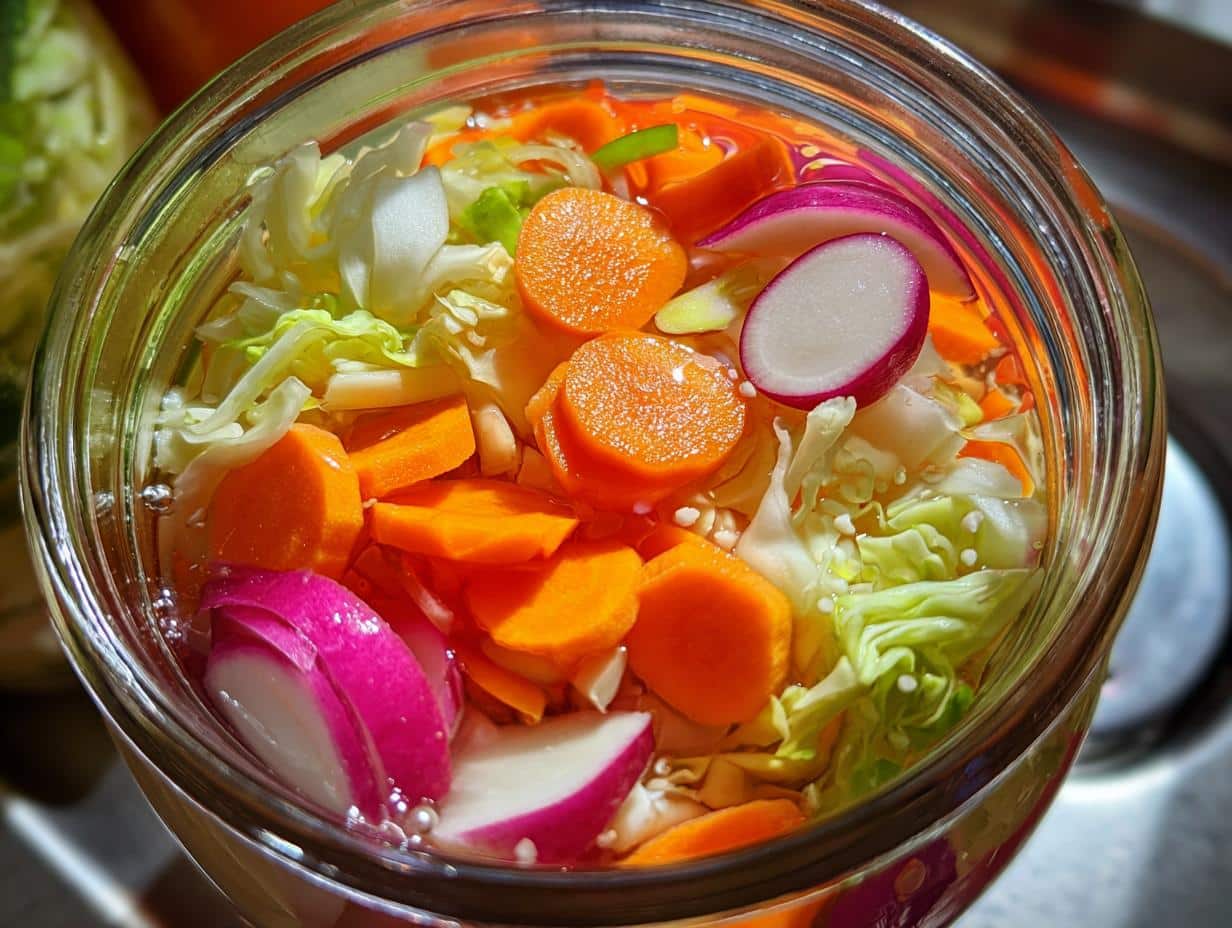
You know that wrinkly carrot at the bottom of your crisper drawer? The cabbage half that’s been sitting there just a bit too long? I used to toss them without thinking – until I discovered the magic of zero waste fermented vegetables. My “aha” moment came during a particularly frugal month when I couldn’t bear to waste one more limp vegetable. What started as desperation turned into a revelation: those forgotten veggies transform into tangy, probiotic-packed delights with just salt, water, and time.
Now my kitchen counter always hosts at least one jar of bubbling goodness. The best part? You’re not just preventing food waste – you’re creating something alive and vibrant. These zero waste fermented vegetables taste like crisp, salty sunshine, and they do wonders for your gut. I swear my digestion hasn’t been this happy since I was a kid eating dirt (don’t judge – it builds immunity!).
What makes this method so special is its beautiful simplicity. No fancy equipment, no exact measurements – just you, some neglected produce, and the wild yeasts already floating around your kitchen. It’s like having a tiny ecosystem on your countertop, turning what would’ve been compost into the tastiest health food imaginable.
Why You’ll Love These Zero Waste Fermented Vegetables
Let me count the ways these bubbly little jars will steal your heart (and probably your crisper drawer space too):
- Your gut will sing! Each bite packs a probiotic punch that store-bought versions just can’t match. I swear my digestion runs smoother than a jazz trio since making this a habit.
- Guilt-free snacking that actually reduces food waste? Yes please! Those half-wilted veggies you’d normally toss suddenly become the star of your charcuterie board.
- Your wallet will thank you. Skip the $8 boutique ferments—this costs pennies per batch. I’ve literally made gallons from produce that would’ve gone bad otherwise.
- Endless flavor playground! Spicy radishes today, garlicky cabbage tomorrow. My current obsession? Adding citrus peels for a bright twist (just trust me on this one).
Honestly, the biggest problem you’ll have? Deciding which delicious variation to make next!
Ingredients for Zero Waste Fermented Vegetables
Here’s the beautiful part – you likely have everything you need already! The magic happens with just three essentials:
- 2 cups chopped seasonal vegetables (aim for 1/2-inch pieces – my favorites are carrots, cabbage, and radishes, but get creative!)
- 1 tbsp sea salt (non-iodized is crucial – table salt can mess with fermentation)
- 2 cups filtered water (chlorine-free keeps the good bacteria happy)
Now for the fun extras that make each batch unique:
- 1 tsp whole peppercorns (optional, but adds lovely warmth)
- 2 garlic cloves (optional – smash them for extra punch!)
- 1 tsp coriander seeds (optional – my secret weapon for complex flavor)
See? I told you it was simple. Now let’s turn those odds and ends into something spectacular!
Essential Equipment for Zero Waste Fermentation
Here’s the beautiful truth – you don’t need fancy gadgets to make amazing fermented vegetables! My whole setup cost less than my morning coffee habit:
- Quart-sized glass jar (I repurpose pickle jars – just scrub them well!)
- Fermentation weight (No special weight? Use a smaller glass jar filled with water – it works like a charm!)
- Breathable cover (Cheesecloth or even a clean kitchen towel secured with a rubber band does the trick)
The best part? Everything gets reused batch after batch. Now that’s what I call smart fermenting!
How to Make Zero Waste Fermented Vegetables
Okay, let’s get our hands dirty (metaphorically – cleanliness is key here)! Making zero waste fermented vegetables is easier than remembering your WiFi password, I promise. Just follow these simple steps and you’ll have bubbling jars of goodness in no time.
Preparing Your Vegetables
First, raid your fridge for those lonely veggies – the slightly soft carrots, the outer cabbage leaves, the radishes that got buried behind the milk. Imperfect produce makes perfect ferments! Chop everything into roughly 1/2-inch pieces – this ensures even fermentation. My grandma always said “uniform pieces mean happy microbes,” and she wasn’t wrong.
Creating the Brine Solution
Now for the magic potion: dissolve 1 tablespoon sea salt in 2 cups filtered water. I like to warm the water slightly to help the salt dissolve completely – cloudy brine means unhappy fermentation. Stir until no salt crystals remain at the bottom. This brine ratio is my golden rule – too little salt and your veggies might spoil, too much and the fermentation slows to a crawl.
Fermenting Your Zero Waste Vegetables
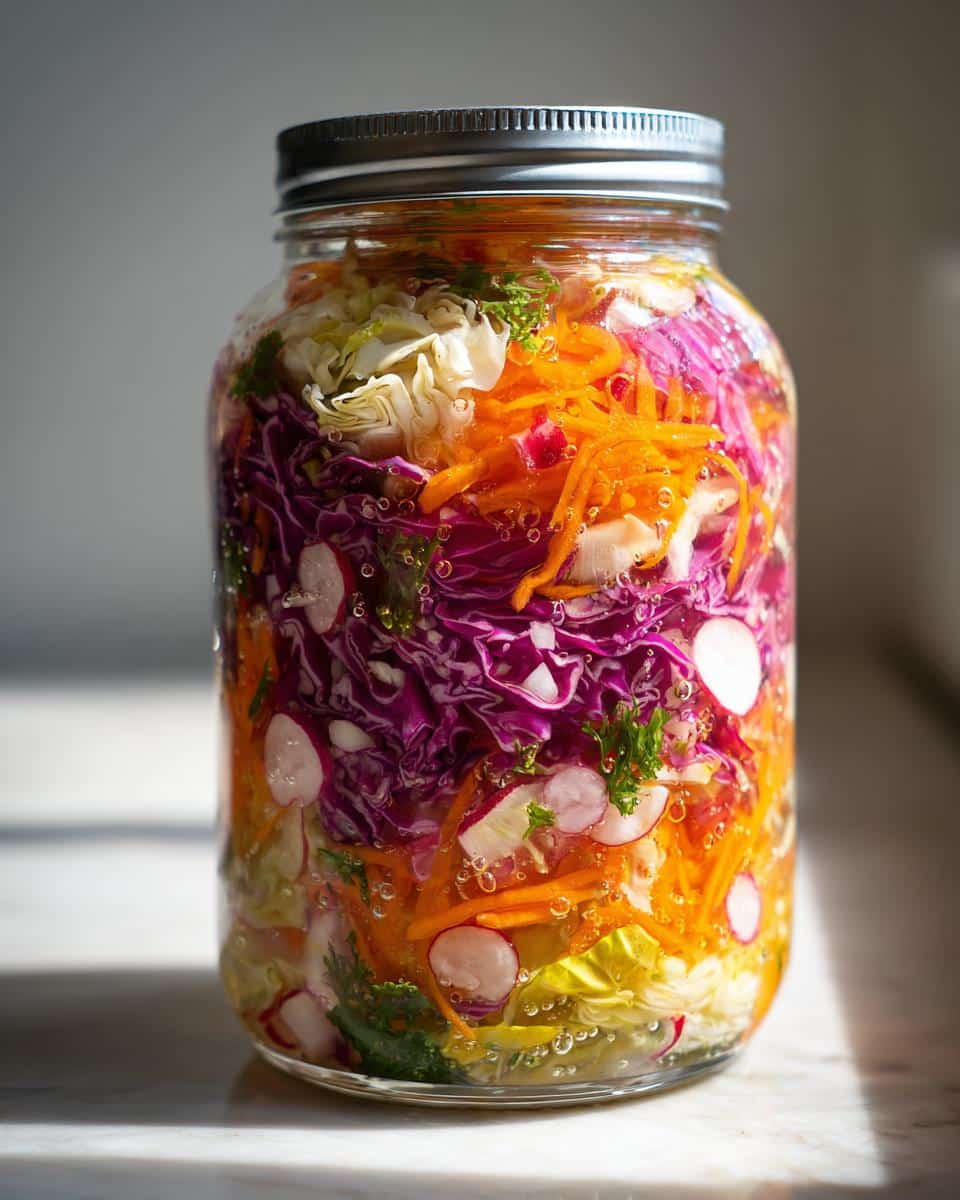
Pack your chopped veggies tightly into a clean jar, leaving about 1 inch of headspace. Pour the brine over until everything’s submerged (this is crucial!). Pop in your weight to keep everything under the liquid – exposed veggies invite mold. Cover with a cloth and secure with a rubber band.
Now comes the fun part: the waiting game! Keep your jar at room temperature (around 65-75°F is ideal) for 3-7 days. Check daily – you’ll start seeing tiny bubbles after about 24 hours (that’s the good bacteria throwing a party!). If any foam forms on top, just skim it off with a clean spoon. The veggies are ready when they taste pleasantly tangy to your liking – trust your tastebuds!
Pro tip: Don’t freak out if the brine gets cloudy or the veggies change color – that’s totally normal fermentation magic happening. But if you see fuzzy mold? Toss it and start fresh. Better safe than sorry!
Pro Tips for Perfect Zero Waste Fermented Vegetables
After countless batches (and a few hilarious failures), I’ve learned these golden rules for foolproof fermentation:
- Temperature matters! Keep your jar between 65-75°F – too cold and fermentation stalls, too hot and things get funky fast. My kitchen windowsill is perfect in spring and fall.
- Organic is best when possible – conventional produce often has waxes or preservatives that can interfere with fermentation. Those ugly farmers market rejects? Perfect candidates!
- Burp your jar daily if using a tight lid – built-up CO2 can create a fizzy explosion (ask me how I know!). A cloth cover eliminates this issue entirely.
- White film isn’t mold – it’s harmless kahm yeast. Just skim it off. But fuzzy or colored spots? Toss immediately.
- Trust your nose – good ferments smell tangy and fresh. If it makes you recoil, don’t taste it!
Follow these tips and you’ll be a fermentation pro in no time!
Storing and Using Your Fermented Vegetables
Once your zero waste fermented vegetables reach that perfect tangy bite, pop them in the fridge to slow down fermentation. They’ll keep happily for months (if they last that long – mine never do!). The flavors actually deepen over time, so don’t be afraid to let them mature a bit.
Now for the fun part – eating them! I toss these probiotic powerhouses on everything: rice bowls, sandwiches, even pizza (trust me, fermented radishes on pizza is life-changing). That leftover brine? Gold! Use it to jumpstart your next batch or add a probiotic punch to salad dressings. My favorite trick? A splash in Bloody Marys – it adds the perfect salty tang!
Zero Waste Fermented Vegetables Variations
Once you’ve mastered the basics, the flavor possibilities are endless! Here are my favorite ways to mix things up:
- Asian-inspired: Swap cabbage for bok choy, add ginger slices and a pinch of red pepper flakes. The result? Crunchy, spicy perfection that’s amazing in rice bowls.
- Mediterranean twist: Use cauliflower with garlic, lemon zest, and oregano. It tastes like sunshine in a jar – perfect with hummus!
- Sweet & spicy: Carrots with orange peel and cinnamon sticks make a surprisingly addictive combo. My kids go crazy for this one!
- Everything mix: Throw in whatever’s left in your fridge – I’ve made killer batches with radish tops, kale stems, and even green tomato slices!
The best part? Every batch tastes uniquely yours. Happy experimenting!
Zero Waste Fermented Vegetables FAQ
I get asked about these bubbling jars of goodness all the time! Here are the most common questions from fellow fermentation newbies:
Q1. Is it safe to ferment vegetables at home?
Absolutely! The salt brine creates an environment where good bacteria thrive and bad bacteria can’t survive. Just keep everything submerged and trust your senses – if it smells funky (not just sour) or looks moldy, toss it. I’ve never had issues following these simple rules!
Q2. Why does my brine look cloudy?
Don’t panic! Cloudy brine is completely normal in fermentation – it’s just a sign those happy little microbes are doing their job. The cloudiness comes from lactic acid bacteria multiplying. As long as it smells pleasantly tangy, you’re golden.
Q3. Are fermented vegetables vegan?
100% plant-powered goodness! Just veggies, salt, water, and time. No animal products whatsoever. Even my hardcore vegan friends approve (and constantly raid my fridge for them).
Q4. How do I know when fermentation is complete?
Taste test starting at day 3 – you want a nice tangy bite but still some crunch. The longer it ferments, the softer and more sour it gets. I like mine at about day 5, but it’s totally personal preference!
Q5. Can I reuse the brine for my next batch?
You bet! That liquid gold is packed with probiotics. Just save about 1/4 cup to jumpstart your next fermentation. I call it my “starter tea” – it cuts fermentation time nearly in half!
Nutritional Information
These zero waste fermented vegetables are basically nature’s multivitamin! While exact nutrition varies based on your veggie mix and fermentation time, here’s what you can generally expect per 1/4 cup serving: Just 15 calories packed with gut-friendly probiotics, 1g fiber, and minimal sugar. The sodium content comes mostly from the brine – you can rinse before eating if watching salt intake. Honestly? The health benefits far outweigh any numbers – my digestion hasn’t been this happy in years!
Print
Zero waste fermented vegetables transform scraps in 5 days
- Total Time: 3-7 days
- Yield: 1 quart
- Diet: Vegan
Description
Make your own zero waste fermented vegetables at home with simple ingredients and minimal equipment. This recipe helps reduce food waste while creating a healthy, probiotic-rich condiment.
Ingredients
- 2 cups chopped seasonal vegetables (carrots, cabbage, radishes, or cauliflower)
- 1 tbsp sea salt
- 2 cups filtered water
- 1 tsp whole peppercorns (optional)
- 2 garlic cloves (optional)
- 1 tsp coriander seeds (optional)
Instructions
- Chop vegetables into bite-sized pieces
- Dissolve salt in water to create brine
- Pack vegetables tightly into a clean jar
- Pour brine over vegetables until fully submerged
- Place a weight on top to keep vegetables under liquid
- Cover jar with cloth and secure with rubber band
- Ferment at room temperature for 3-7 days
- Check daily and remove any surface foam
- Transfer to refrigerator when desired sourness is reached
Notes
- Use organic vegetables when possible
- Save vegetable scraps for broth
- Adjust fermentation time for preferred sourness
- Sterilize jars before use
- Prep Time: 15 minutes
- Cook Time: 0 minutes
- Category: Condiment
- Method: Fermentation
- Cuisine: International