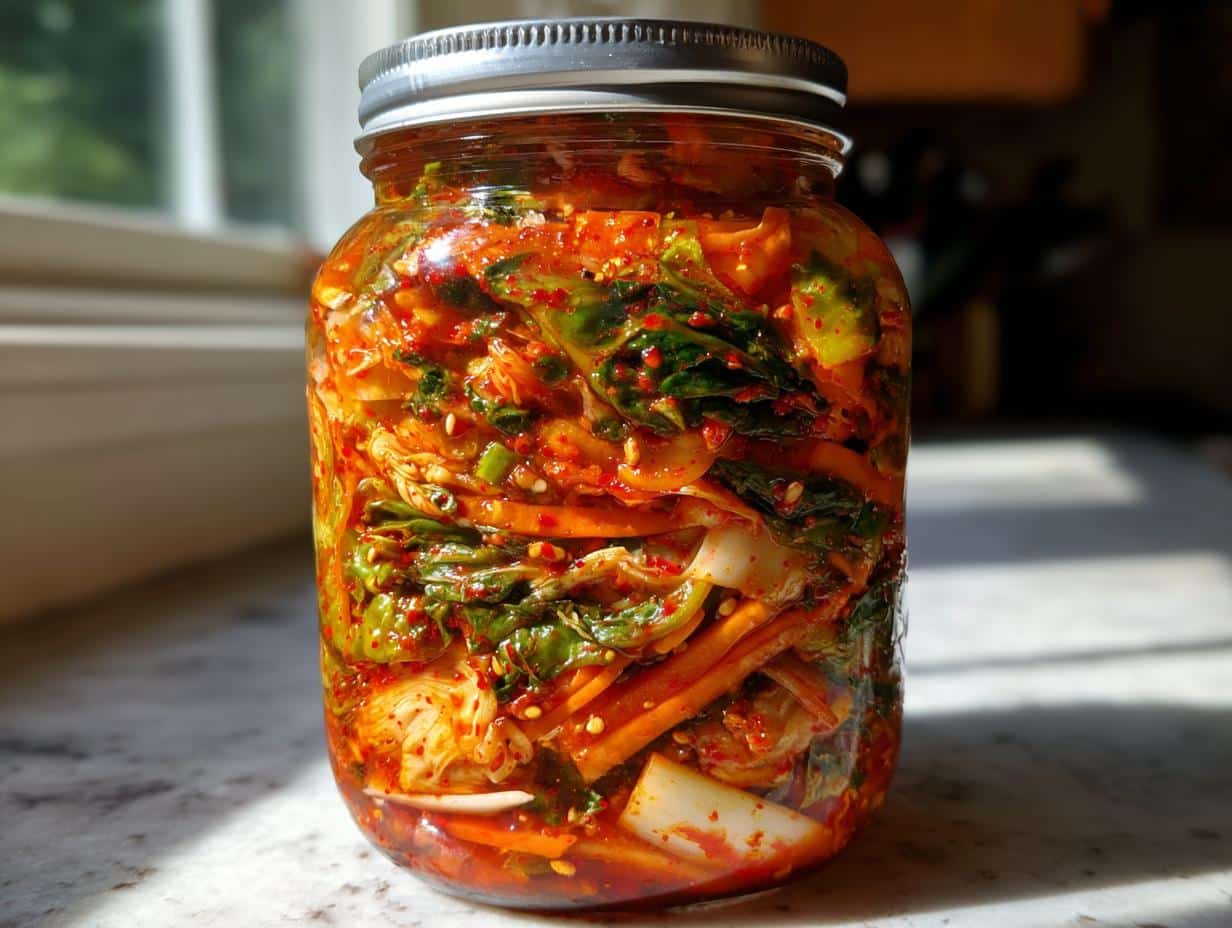
Oh my gosh, let me tell you about the first time I made homemade fermented kimchi – what a delicious adventure! I’ll never forget how my tiny apartment smelled like garlic and spice for days (in the best way possible). If you’ve never tried making your own kimchi before, you’re in for such a treat. Not only does it taste a million times better than store-bought, but it’s packed with those amazing probiotics that do wonders for your gut health.
I was intimidated at first – all those ingredients! That fermentation process! But trust me, it’s way easier than you think. Once you get the hang of it, you’ll be hooked. There’s something magical about watching those bubbles form as the flavors develop. And the best part? You can tweak the spice level exactly how you like it. My first batch was so fiery it made my nose run, but now I’ve perfected my ideal balance of tangy, spicy, and just a little sweet.
This homemade fermented kimchi recipe is my go-to because it keeps things simple without sacrificing any of that authentic Korean flavor. Whether you’re new to fermentation or a seasoned pro, you’re going to love how this turns out. Just wait until you taste that first crunchy, flavorful bite!
Why You’ll Love This Homemade Fermented Kimchi
Once you try making your own kimchi, you’ll never go back to the store-bought stuff! Here’s why this homemade fermented kimchi recipe is absolutely worth the little bit of effort:
- Probiotic powerhouse: Each bite is bursting with gut-friendly bacteria that store-bought versions lose during pasteurization. Your digestive system will thank you!
- Authentic flavors: That perfect balance of garlicky, spicy, and tangy? You just can’t get this depth from mass-produced kimchi.
- Budget-friendly: For the price of one small jar at the specialty store, you can make quarts of homemade fermented kimchi.
- Make it yours: Love it extra spicy? Add more gochugaru. Prefer it milder? Go easy on the pepper flakes. It’s all up to you!
Seriously, once you taste the difference fresh homemade kimchi makes in your bibimbap or just straight from the jar, you’ll be hooked!
Ingredients for Homemade Fermented Kimchi
Gathering the right ingredients makes all the difference in homemade fermented kimchi – trust me, I learned this the hard way after a disastrous batch with regular chili powder! Here’s exactly what you’ll need:
- 1 large napa cabbage (about 2 lbs) – look for crisp, tightly packed heads
- 1/4 cup sea salt (non-iodized!) – iodized salt can inhibit fermentation
- 4 cups water for the brine
- 3 tbsp Korean red pepper flakes (gochugaru – no substitutes!)
- 1 tbsp grated ginger – fresh makes all the difference
- 3 cloves garlic, minced finely
- 1 tbsp sugar to balance the flavors
- 4 green onions, chopped into 1-inch pieces
- 1 daikon radish, julienned (about 1 cup)
- 1 carrot, julienned (about 1/2 cup)
Pro tip: Wear gloves when handling the gochugaru unless you want spicy orange fingers for days! And don’t skip the daikon – it adds the best crunch.
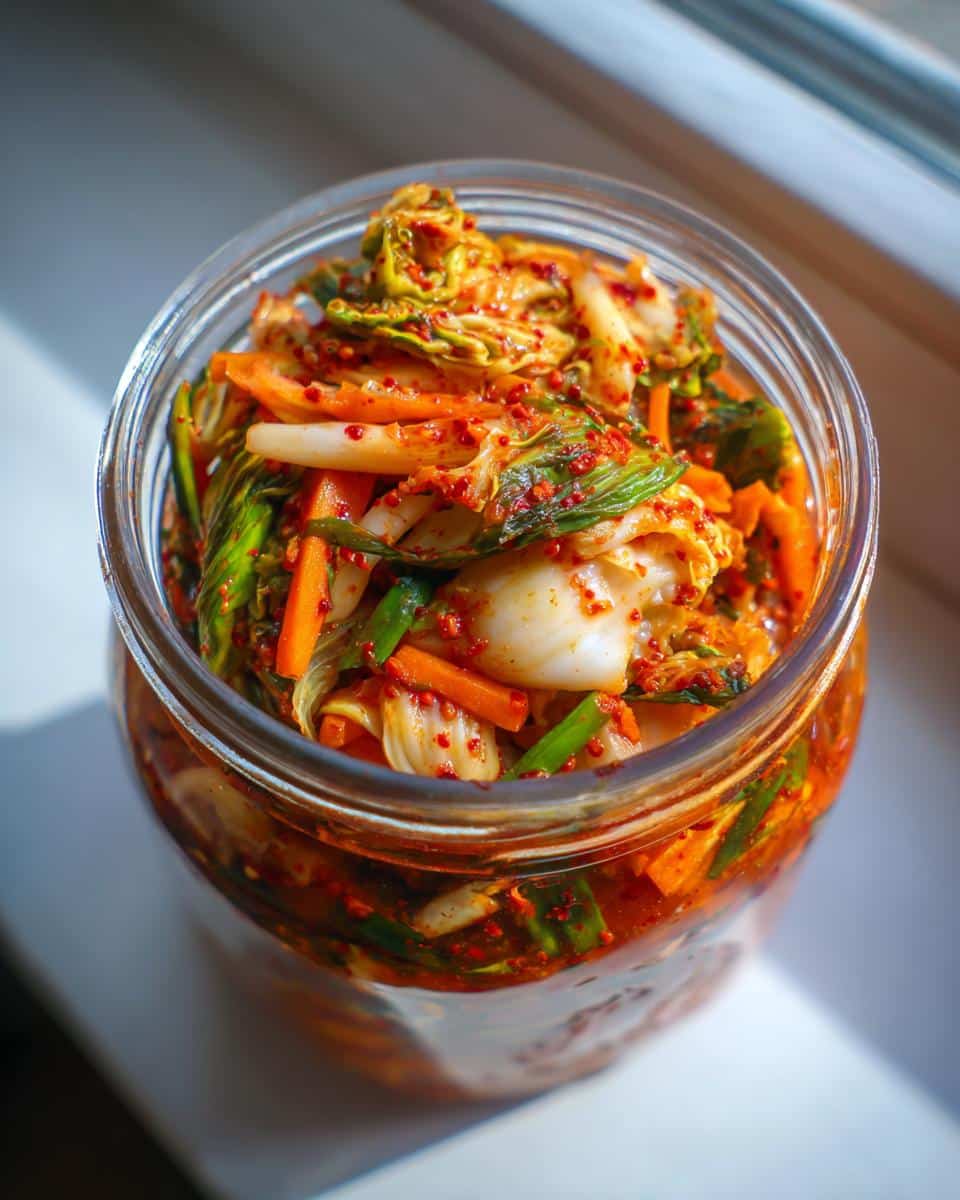
Equipment You’ll Need
Don’t worry – you don’t need fancy gadgets to make amazing homemade fermented kimchi! Here’s what I always have ready:
- Large mixing bowl (big enough for your cabbage quarters)
- Clean glass jars (1-quart mason jars work perfectly)
- Kitchen gloves (unless you want spicy hands!)
- Fermentation weights (or a small clean glass that fits inside your jar)
Optional but nice: A fermentation lid makes burping easier, but honestly, I’ve made great kimchi just using regular jar lids and remembering to “burp” them daily. The bubbles are half the fun!
How to Make Homemade Fermented Kimchi
Okay, let’s get our hands dirty (literally!) and make some amazing homemade fermented kimchi. I’ll walk you through each step – it’s easier than you think, I promise! Just follow along and soon you’ll have jars of tangy, spicy goodness bubbling away on your counter.
Preparing the Cabbage
First things first – we need to get that cabbage ready! Cut your napa cabbage into quarters lengthwise and remove the tough core from each piece. Now, dissolve the sea salt in water to make your brine – I like using warm water to help it dissolve faster.
Submerge those cabbage quarters completely in the brine, weighing them down with a plate if needed. Let them soak for about 2 hours, flipping halfway through. You’ll know they’re ready when the thick white parts bend easily without snapping. Then rinse them really well – I do it three times under cold water to remove excess salt. Pro tip: Save about 1 cup of that brine just in case we need it later!
Mixing the Kimchi Paste
Now for the fun part – making that vibrant red paste! Grab your gloves (seriously, don’t skip this unless you want orange hands for days). Mix together the grated ginger, minced garlic, sugar, and that gorgeous Korean red pepper flakes (gochugaru).
The paste should be thick but still spreadable – kind of like tomato paste consistency. If it’s too dry, add just a teaspoon of water at a time until it’s right. Then toss in your chopped green onions, julienned daikon, and carrots. Get in there with your hands (still gloved!) and massage everything together until all those veggies are beautifully coated.
Fermenting Your Kimchi
Time to assemble our masterpiece! Take each cabbage quarter and spread the paste mixture between all the leaves – don’t be shy, really get it in there. Then pack everything tightly into your clean jar, pressing down as you go to remove air pockets.
Leave about 2 inches of space at the top – trust me, you’ll need it when the bubbling starts! If your veggies aren’t completely covered by liquid, add some of that reserved brine. Pop on your lid (not too tight!) and let it sit at room temperature for about 48 hours. You’ll start seeing little bubbles after the first day – that’s the magic happening! Just remember to “burp” your jar daily by briefly opening it to release pressure. After 2 days, move it to the fridge and let the flavors keep developing!
Pro Tips for Perfect Homemade Fermented Kimchi
After making countless batches of homemade fermented kimchi (and learning from all my mistakes!), here are my can’t-live-without tips for kimchi success:
- Keep everything submerged: Those bubbles will push veggies up – use a clean weight or small jar to keep them under the brine. No brine? Add some of that reserved salt water!
- Cleanliness is key: Always use clean utensils when handling your fermenting kimchi to avoid introducing bad bacteria.
- Find the sweet spot: 65-75°F is the magic temperature range for fermentation. Too cold and nothing happens; too hot and it ferments too fast!
- Taste as you go: After 24 hours, sneak a little taste. Want more tang? Let it go longer. Perfect? Into the fridge it goes!
Remember – every batch is different, and that’s part of the fun! Trust your instincts and soon you’ll be a kimchi pro.
Storing and Serving Suggestions
Once your homemade fermented kimchi hits that perfect tangy spot, pop it in the fridge to slow down fermentation. It’ll keep beautifully for up to a month – though mine never lasts that long! The flavors actually keep developing, getting more complex over time.
I love serving it straight from the fridge as a crunchy side dish, but don’t stop there! Toss it in fried rice, fold it into omelets, or simmer it in stews for that incredible umami kick. My favorite? Kimchi grilled cheese – trust me, it’s life-changing!
Homemade Fermented Kimchi Variations
One of my favorite things about kimchi is how endlessly customizable it is! Here are some delicious twists I’ve tried over the years:
- Bok choy beauty: Swap napa cabbage for baby bok choy when you want a more delicate texture – perfect for quick ferments!
- Sweet surprise: Add julienned Asian pear or apple for natural sweetness that balances the spice beautifully.
- Mild magic: Cut the gochugaru in half for a kid-friendly version (my niece calls this “pink kimchi”).
- Seafood lovers: Toss in some small shrimp or oysters during packing for authentic Korean flavor.
The possibilities are endless – make it your own!
Homemade Fermented Kimchi FAQs
I get so many questions about homemade fermented kimchi – let me answer the ones that come up most often!
“Can I substitute regular chili powder for gochugaru?”
Oh honey, no! I made this mistake once and regretted it immediately. Korean red pepper flakes (gochugaru) have a unique sweet-smoky flavor that regular chili powder just can’t match. Trust me – hunt down the real stuff (Asian markets always have it) or order online. Your taste buds will thank you!
“How can I tell if my kimchi has gone bad?”
Your nose knows! Good kimchi smells tangy and pungent, but spoiled kimchi will have mold (usually fuzzy and colorful) or an off-putting slimy texture. If it smells rotten instead of fermented, toss it. But don’t worry – cloudy liquid and bubbles are totally normal signs of happy fermentation!
“Is there a way to speed up fermentation?”
Absolutely! Move your jar to a warmer spot (around 75°F is perfect) and check it more frequently. The bubbles will start dancing sooner! Just remember – faster fermentation means you’ll need to taste-test more often to catch it at your preferred tanginess level before refrigerating.
Nutritional Information
Here’s the scoop on what’s in your homemade fermented kimchi (per 1/4 cup serving): about 15 calories, 1g fiber, and packed with gut-healthy probiotics! Remember – these values are estimates since your exact ingredients and fermentation time will affect the final nutrition. But one thing’s for sure – it’s way healthier than anything you’ll find on a store shelf!
Print
Fiery Homemade Fermented Kimchi Recipe with 3 Secret Tips
- Total Time: 2 hours (plus fermentation time)
- Yield: 1 quart
- Diet: Vegetarian
Description
Make your own homemade fermented kimchi with this simple recipe. Kimchi is a traditional Korean side dish packed with flavor and probiotics.
Ingredients
- 1 large napa cabbage (about 2 lbs)
- 1/4 cup sea salt
- 4 cups water
- 1 tbsp grated ginger
- 3 cloves garlic, minced
- 1 tbsp sugar
- 3 tbsp Korean red pepper flakes (gochugaru)
- 4 green onions, chopped
- 1 daikon radish, julienned
- 1 carrot, julienned
Instructions
- Cut the cabbage into quarters and remove the core.
- Dissolve salt in water to make brine. Soak cabbage in brine for 2 hours.
- Rinse cabbage and drain well.
- Mix ginger, garlic, sugar, and red pepper flakes to make paste.
- Combine paste with vegetables.
- Spread mixture between cabbage leaves.
- Pack kimchi tightly into clean jar.
- Leave at room temperature for 1-2 days.
- Store in refrigerator for up to 1 month.
Notes
- Use gloves when handling red pepper flakes.
- Burp the jar daily to release gases.
- Taste improves with longer fermentation.
- Keep kimchi submerged in liquid.
- Prep Time: 2 hours
- Cook Time: 0 minutes
- Category: Side Dish
- Method: Fermentation
- Cuisine: Korean