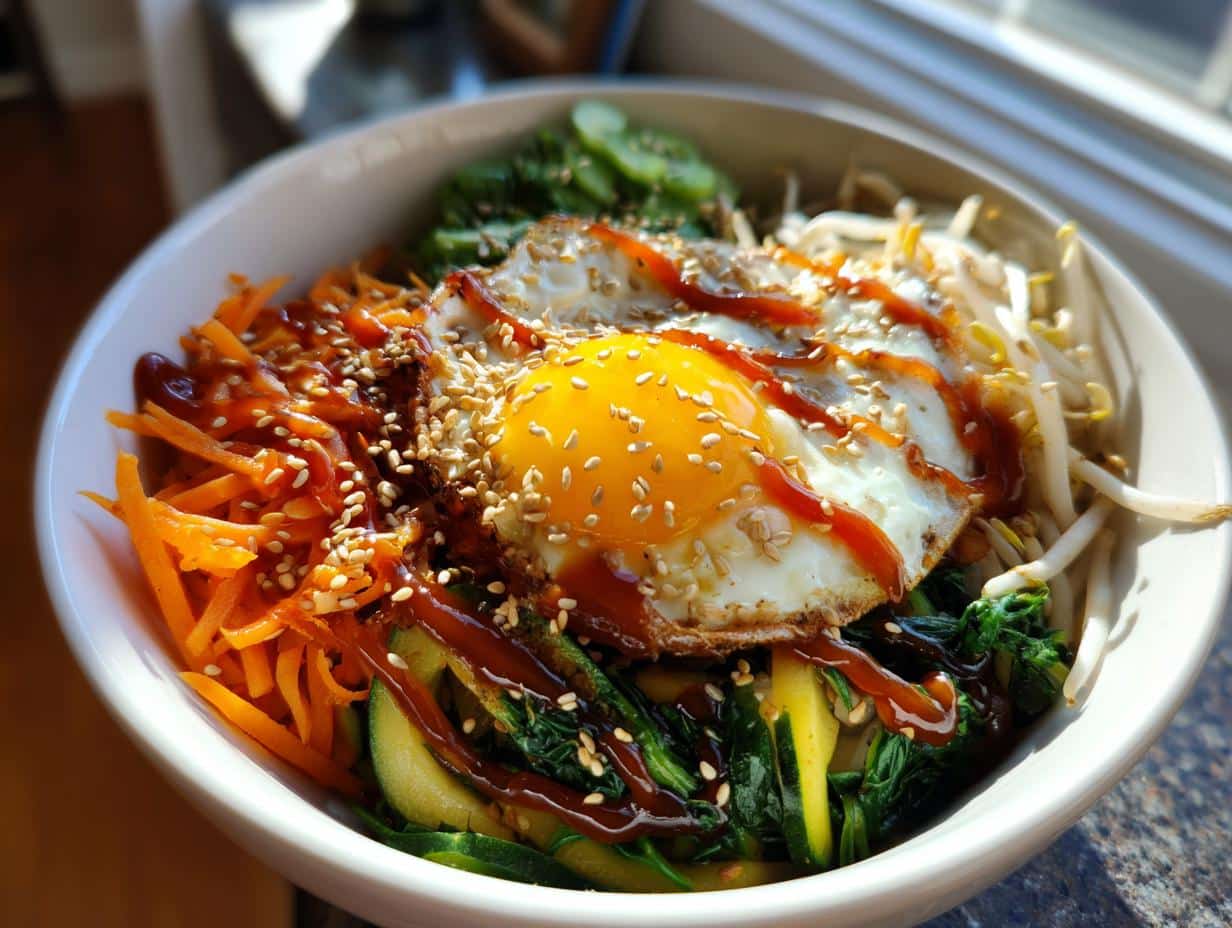
Oh my gosh, you have to try this vegetarian bibimbap bowl! I fell in love with Korean food during my first trip to Seoul years ago, but when I went vegetarian, I thought I’d have to give up my beloved bibimbap. Wrong! This version packs all those incredible flavors – sweet, spicy, savory – into one gorgeous bowl bursting with fresh veggies. The best part? It comes together faster than takeout.
I still remember the first time I made this at home. My kitchen smelled like a Korean street food stall – that magical mix of toasted sesame oil and gochujang chili paste. Even my meat-loving husband devoured it! Now it’s our go-to weeknight meal when we want something healthy but packed with flavor. Trust me, once you try mixing that runny yolk (if you do eggs) into the rice and veggies, you’ll be hooked too.
Why You’ll Love This Vegetarian Bibimbap Bowl
This isn’t just another grain bowl – it’s a flavor explosion waiting to happen! Here’s why it’s become my weeknight superhero:
- Crazy quick: Done in under 30 minutes (faster than waiting for delivery!)
- Healthy but hearty: Packed with colorful veggies that actually taste amazing
- Totally customizable: Swap veggies based on what’s in your fridge
- That sauce though: The sweet-spicy gochujang will have you licking the bowl
- Meal prep friendly: Components keep beautifully for easy lunches
Seriously, even my picky niece asks for seconds when I make this. The crispy rice bits mixed with that sauce? Absolute magic.
Ingredients for Your Vegetarian Bibimbap Bowl
Okay, let’s raid the fridge! Here’s what you’ll need for that perfect bibimbap harmony – I’ve included my favorite swaps too:
- 1 cup cooked rice (day-old works BEST for those crispy bits!)
- 1 carrot, julienned (I use the wide holes on my box grater when I’m lazy)
- 1 zucchini, julienned (or swap for shiitake mushrooms if you’re feeling fancy)
- 1 cup spinach (baby kale works in a pinch)
- 1 cup bean sprouts (that satisfying crunch is non-negotiable)
- 1 tbsp sesame oil (toasted kind – don’t skip this flavor bomb!)
- 2 tbsp gochujang (Korean chili paste – start with 1 tbsp if you’re spice-shy)
- 1 tbsp soy sauce (or tamari for gluten-free)
- 1 tsp sugar (trust me, it balances the heat perfectly)
- 1 tbsp toasted sesame seeds (for that nutty finish)
- 1 fried egg (optional but oh-so-good when the yolk runs into the rice)
See? Mostly pantry staples with a few fresh stars. The beauty is you can riff with whatever veggies are wilting in your crisper drawer!
Equipment You’ll Need
Don’t worry – you don’t need fancy gear for this bibimbap magic! Just grab:
- A trusty skillet (for those perfect crispy veggies)
- Small mixing bowls (for sauce and prepped ingredients)
- Rice cooker or pot (though I’ve used microwave rice in a pinch!)
That’s it! Now let’s get cooking.
How to Make a Vegetarian Bibimbap Bowl
Alright, let’s make some magic happen! This comes together faster than you’d think – I’ve timed myself at 22 minutes on a good day (while chatting with my sister on speakerphone, no less). Here’s exactly how I layer all those gorgeous flavors:
Step 1: Prepare the Rice
First things first – rice is the foundation! I swear by using day-old rice that’s been chilling in the fridge. It fries up with those perfect crispy bits that make bibimbap so special. If you’re cooking fresh, use slightly less water so it’s not mushy. Spread it thin in the bowl later – we want maximum surface area for that golden crust!
Step 2: Cook the Vegetables
Now the fun part! Heat your skillet over medium-high with just a drizzle of that glorious sesame oil. Here’s my veggie routine:
- Carrots: Sauté 2 minutes until slightly softened but still crunchy
- Zucchini: Same pan, another 2 minutes until bright green
- Spinach & sprouts: Quick 30-second blanch in boiling water (shock them in ice water if you’re fancy)
Keep them separate – we’re building layers of flavor here! Little bowls help.
Step 3: Make the Gochujang Sauce
This sauce is LIFE. In a small bowl, whisk together:
- 2 tbsp gochujang (start with 1 if you’re nervous!)
- 1 tbsp soy sauce
- 1 tsp sugar
- 1 tsp water to loosen
Taste and adjust – sometimes I add a tiny splash of rice vinegar for brightness. The sauce should coat the back of a spoon nicely.
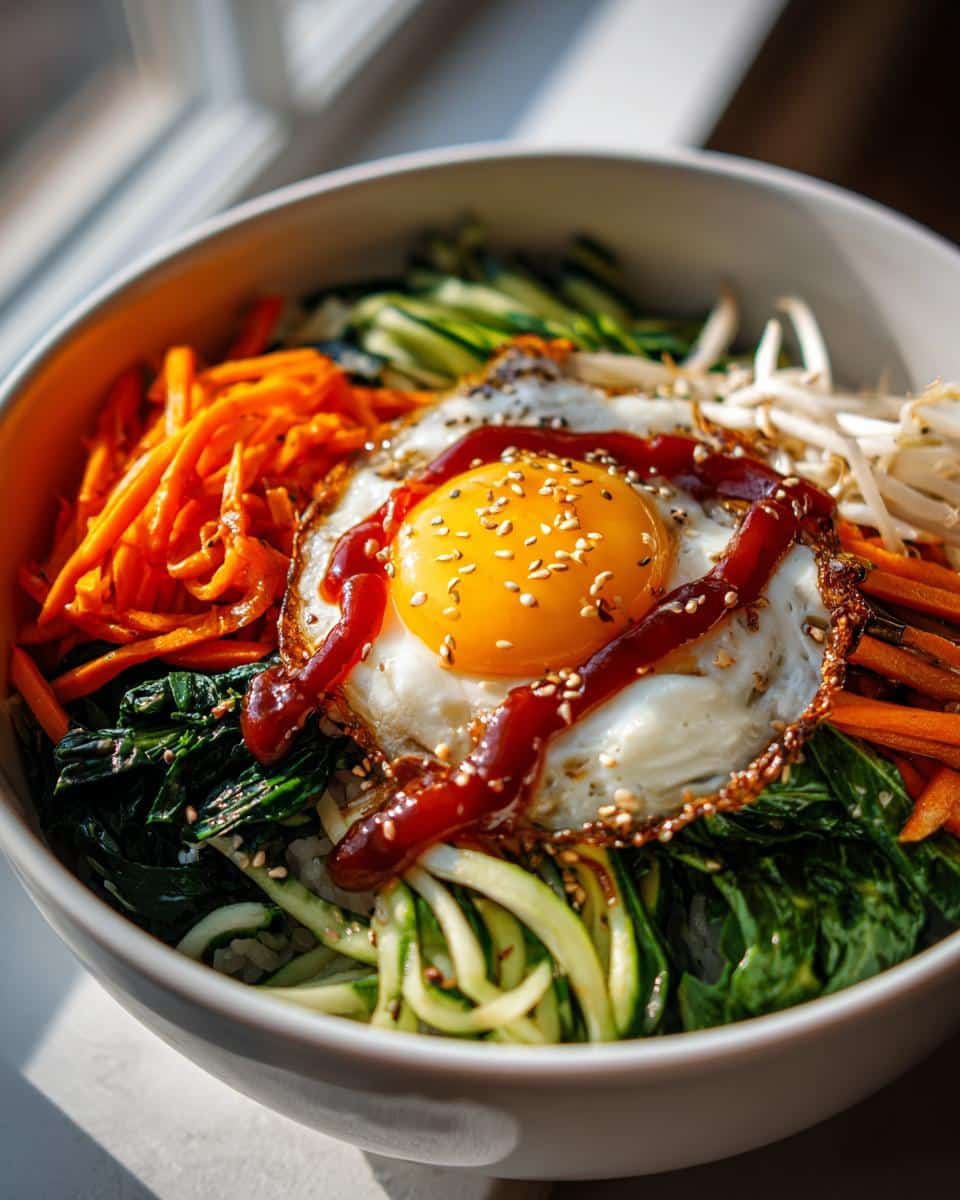
Step 4: Assemble Your Vegetarian Bibimbap Bowl
The grand finale! Here’s how I layer for maximum visual drama:
- Hot rice in the bowl (press it down slightly)
- Arrange veggies in colorful sections like a pie chart
- Drizzle sauce generously over everything
- Top with sesame seeds and that perfect fried egg
Now the fun part – mix it all up violently! Those crispy rice bits mingling with the yolk and sauce? Absolute perfection. Dig in while it’s piping hot!
Tips for the Perfect Vegetarian Bibimbap Bowl
After making this weekly for years, I’ve learned a few tricks that take it from good to “OMG I need this every day” status:
- Toast your sesame oil – Just 10 seconds in the pan makes the flavor pop!
- Gochujang too spicy? Mix in a teaspoon of honey or maple syrup to tame the heat
- Rice texture matters – If fresh, spread it thin in the bowl to get those crispy edges
- Prep veggies ahead – They keep beautifully for 2 days in the fridge
The biggest secret? Don’t skimp on mixing – that saucy, messy blend is where the magic happens!
Variations for Your Vegetarian Bibimbap Bowl
The beauty of bibimbap is how easily you can make it your own! Here are my favorite twists:
- Mushroom lovers: Swap zucchini for shiitakes sautéed with garlic
- Protein boost: Add crispy tofu cubes or a soft-boiled egg
- Seasonal switch: Try roasted sweet potatoes in winter or snap peas in spring
- Vegan version: Skip the egg and use maple syrup instead of sugar in the sauce
Honestly? Whatever makes your taste buds happy works here. That’s the bibimbap spirit!
Serving Suggestions
Oh, you’ve gotta try this with a side of kimchi – that tangy crunch is pure bliss! A small bowl of miso soup makes it feel like a proper Korean feast. Sometimes I’ll even add a few extra banchan (little side dishes) if I’m feeling fancy.
Storing and Reheating Your Vegetarian Bibimbap Bowl
Here’s my foolproof method for keeping leftovers tasting fresh! Store components separately – rice in one container, veggies in another, sauce in a little jar. They’ll keep beautifully for 2-3 days. When reheating, microwave the rice first, then quickly warm veggies in a skillet to keep their crunch. Pro tip: Add a splash of water when reheating rice to bring back that perfect texture. The sauce? Just drizzle it cold – no heating needed!
Nutritional Information
Okay, let’s talk numbers – but remember, these can vary based on your exact ingredients! For my standard bowl with all the fixings, you’re looking at about 450 calories packed with 12g protein from all those gorgeous veggies and egg. Not too shabby for a meal that tastes this indulgent! The sesame oil and gochujang add healthy fats and antioxidants too – bonus!
Frequently Asked Questions
Can I make this bibimbap vegan? Absolutely! Just skip the egg and swap the sugar for maple syrup in the sauce. I’ve used crumbled tofu seasoned with soy sauce as a protein boost – it’s delicious!
What if I can’t find gochujang? Don’t panic! Mix 1 tbsp sriracha with 1 tsp miso paste and 1/2 tsp sugar for a decent quick substitute. It won’t be identical, but it’ll give you that sweet-spicy kick.
Why is my rice soggy? Ah, the classic bibimbap struggle! Always use slightly less water when cooking rice fresh, or better yet – day-old refrigerated rice. Spread it thin in the bowl so it crisps up beautifully.
Can I use frozen veggies? Fresh is best for texture, but in a pinch, frozen stir-fry mixes work! Just sauté them straight from frozen – no need to thaw first. The bean sprouts won’t be as crisp, but it’ll still taste great.
Try this recipe and share your twist in the comments!
Print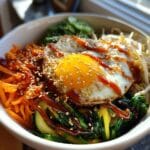
30-Minute Vegetarian Bibimbap Bowl That Will Blow Your Mind
- Total Time: 25 mins
- Yield: 1 serving
- Diet: Vegetarian
Description
A vibrant Korean-inspired vegetarian bibimbap bowl packed with fresh vegetables and bold flavors.
Ingredients
- 1 cup cooked rice
- 1 carrot, julienned
- 1 zucchini, julienned
- 1 cup spinach
- 1 cup bean sprouts
- 1 tbsp sesame oil
- 2 tbsp gochujang (Korean chili paste)
- 1 tbsp soy sauce
- 1 tsp sugar
- 1 tbsp toasted sesame seeds
- 1 fried egg (optional)
Instructions
- Cook rice according to package instructions.
- Sauté carrots and zucchini separately in sesame oil until tender.
- Blanch spinach and bean sprouts in boiling water for 30 seconds, then drain.
- Mix gochujang with soy sauce and sugar to make the sauce.
- Arrange rice in a bowl and top with prepared vegetables.
- Drizzle with sauce and sprinkle sesame seeds.
- Add fried egg on top if desired.
- Mix well before eating.
Notes
- Use day-old rice for better texture.
- Adjust gochujang amount based on your spice preference.
- Add other vegetables like mushrooms or bell peppers if desired.
- Prep Time: 15 mins
- Cook Time: 10 mins
- Category: Main Dish
- Method: Stovetop
- Cuisine: Korean